Media Theories
Andrew Goodwin Theory
Andrew Goodwin stated that every music video features certain different elements. He addresses these 6 steps in his book 'Dancing in the Distraction Factory' to make the audience aware as well as help music video directors when creating music videos. These 6 elements are:
1. Music Videos Demonstrate Genre Characteristics:
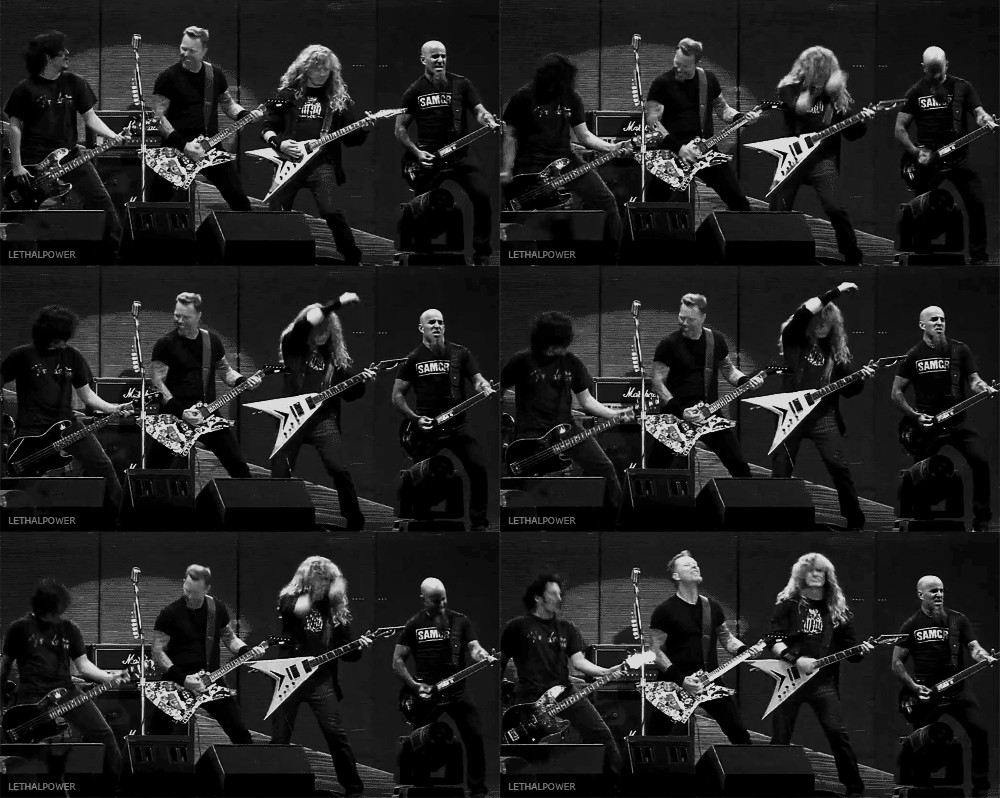
The genre of the artist or the style of the song determines what style of video will be created. Alternative rock music videos include a lot of live performances on a stage as this helps to symbolise the particular genre due to the enthusiastic vibe.


2. There is a Relationship Between Lyrics and Visuals:
The second step focuses on how lyrics link in with the music video's visuals. A song aims to make people feel the emotion and the message that is trying to be created by the artist which is usually further represented in the music video. This is done firstly by the audience analysing the music structure and understanding the chorus and the verses. Then, the (main) singer would sound unique compared to the other singers, -if there are any- giving the person a form of identification that can be related to the singer. Lastly, the artist may be trying to tell a story through the song and the music video.


3. There is a Relationship Between the Music and Visuals:
The next step focuses on how the tone of the song must match and reflect the visuals from the music video. However, sometimes music videos purposely contradict the sounds or lyrics with the visuals in order to emphasise the emotion. There are three ways visuals are used to promote a song:
•Illustrate- music videos use particular shots and images in order to illustrate/explain the meaning behind the lyrics and the link to the genre.
•Disjuncture- this is where the lyrics and meanings are completely ignored within the music video.
•Amplify Repeatability- the images and camera shots are manipulated and shown repeatedly throughout the music video to drill them into our brains and make them memorable.


4. Narrative and Performance of the Song:
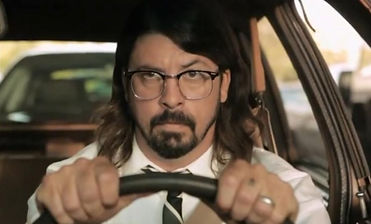
Andrew Goodwin believed that it was important for the artist to be involved in the music video by either performing or acting as a character. This makes the song appear more realistic and helps the audience to connect and understand the narrative/meaning. This step also suggests that the record label would want to include lots of close-up camera shots of the main singer in order to promote the artists as much as possible.

5. Star Image; Shots Making Him/Her the Centre of Attention:
This stage is about making the star image within the music video more appealing for the audience whilst also bringing a unique style to the video. This helps to promote the artist's star image whilst also promoting the video as well as creating a reputation of the artist. The reference of 'looking' is linked to this too which is a visual technique that involves stages and mirrors all focusing on the artist. Most music videos include something called voyeurism which is defined as the practice of gaining sexual pleasure whilst watching someone when they are naked or engaged in sexual activity. In music videos, there is often a women undressing or performing sexual acts but, this is usually only implied and not shown as there are restrictions on what can be included in a music video. This is mainly used as a common interest for the audience and a way of promoting/selling the artist and the song as sexuality is a popular marketing strategy within the media.


6. There Are Often Intertextual References:
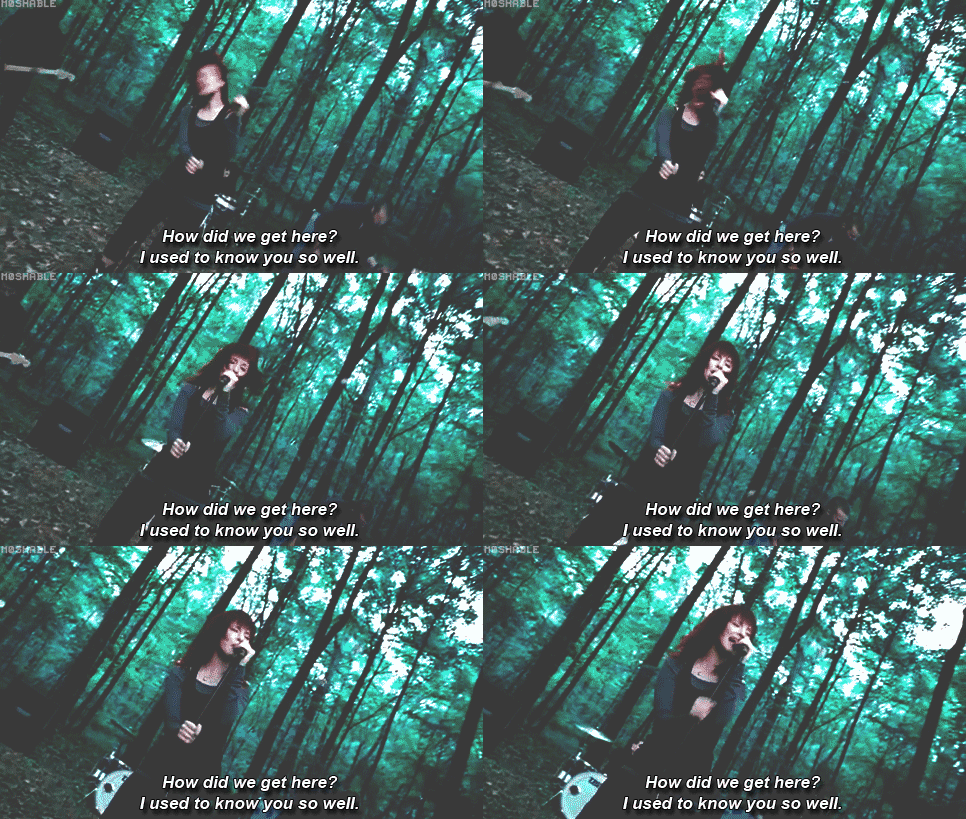
This step from Goodwin's theory can't always be applied but it is mainly used when an artist is linked to other media platforms. Movie soundtracks or parodies of other music videos are examples of intertextuality within music videos as they are shown globally; they may not be universally understood. It can also be used as a successful promotional technique as people who like the intertextual reference in the video, will probably like the music video too. An example of this is in Paramore's music video called 'Decode' which contains both clips from the movie 'Twilight' and the band performing the song in a similar location to the film. By using Paramore's song in the film 'Twilight', this would promote both media products as people may like the sound of the song whilst watching the film. Also, if a Paramore fan is watching their music video they may be interested in the film as the video contains clips taken from it.

Uses and Gratifications Theory
Dick Hebdige Theory
This theory focuses on subcultures which is a group of people with a culture -sometimes distinct other times hidden- which differentiates them from the larger culture they belong to. Hebdige defines a subculture as being a subversion to normalcy. They can be perceived as negative due to the nature of their criticism to the dominant societal standards. However, subcultures bring together like-minded individuals who feel neglected by society's expectations and allow them to develop a sense of identity.


Subcultures can be distinctive because of the age, race, ethnicity, class, location and/or gender of the members. Qualities that determine a subculture as being distinctive may be linguistic, aesthetic, religious, political, sexual, geographical or a combination of factors. Hebdige argues that members of a subculture show that they're part of one through an exclusive and use of style, which includes fashion, mannerisms and language.
It may be difficult to identify certain subcultures because their style (clothing and music) may be adopted by mass culture for commercial purposes. Businesses often seek to capitalise on the subversive allure of subcultures in search of something 'cool', which remains valuable in the selling of any product. Hebdige concentrates on how subcultures rebel through their use of style, not crime.

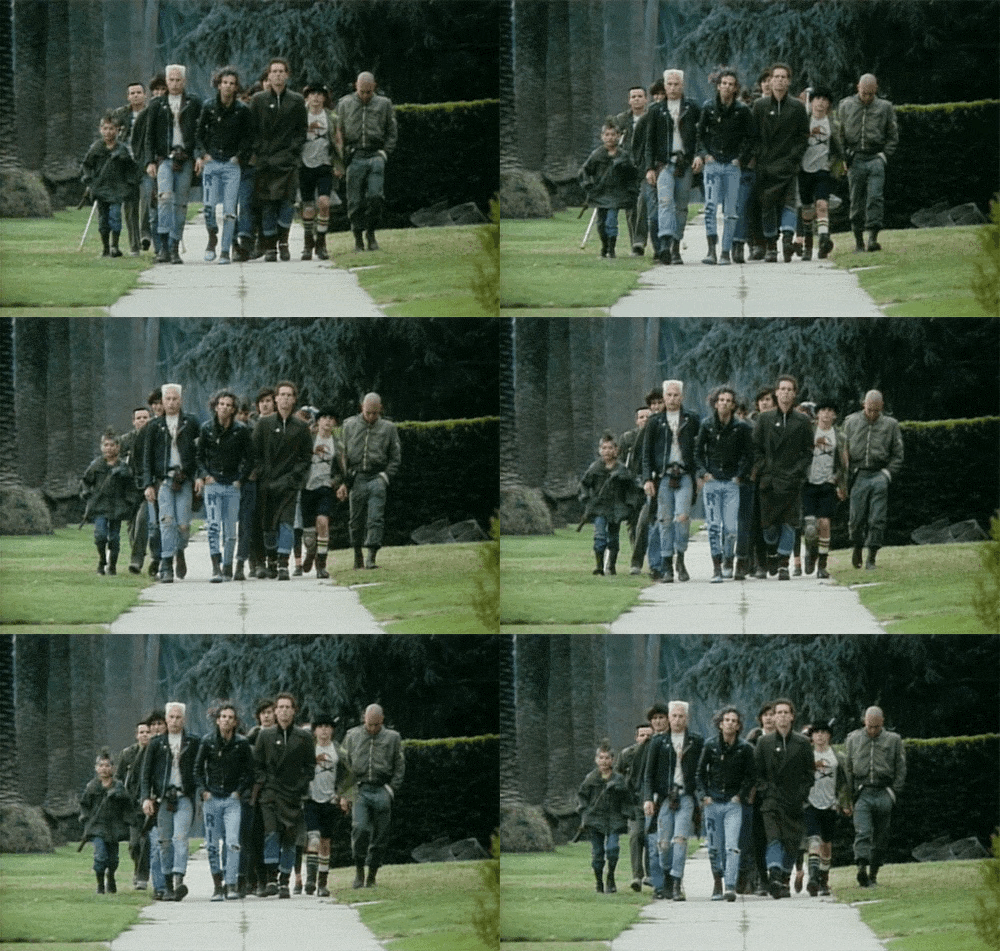
Dick Hebdige wrote a book titled 'Subculture: The Meaning of style'. He believed that style as a 'cultural crime' was something to disturb the status quo and upset the norm, which obviously fits in with the connotations of alternative rock. The silent majority conforms to the dominant values/styles, and assumes everyone else in society does too. Subcultures upset the mainstream because they confront it with differences and do not feel the need to fit in with society's demands and expectations.
Hebdige focused on the origins of punk and located the roots in Rastafarian culture. His theory was that white working-class youths, feeling the loss of community through rising unemployment, the 'invasion' of Asian and Caribbean immigrants and their culture resulted in them feeling the need for separate identity. When black Jamaicans displayed their distinctive music, clothing, gestures, etc. on the street and therefore, took possession of a social space, white working-class youths were indirectly challenged to forge an equally dense style of their own. This meant that, despite huge value and style differences, 'dreads' set a template for cultural identity. Disempowered whites were to use the same template; forge a new identity using dress-codes, music, slang, gestures and behaviours.

Subcultures aren't that different from their 'parent' culture. Mostly they react against or continue some of the values or styles of the parent culture - even if the 'parent' is actually a foreign culture. Hebdige is especially relevant today as he was the first to look at how subcultures are absorbed into the mainstream. He said that subcultures emerge by replacing a previous culture that has been adapted into the mainstream. Because subcultures express their resistance through style; capitalism can manufacture these material things and make a profit from them.